 Wall Muse
A film still is not a painting
The art store hung its first film stills last Monday: thirty-eight frames from A24, the first time a collection there has come from a film studio rather than a gallery. It is a better idea than it sounds. It also walks straight into the oldest problem in hanging pictures, which is that a picture you love for ten seconds is not the same object as a picture you can live beside.
What went up
Samsung's newsroom calls it the first ever cinematic collection for the art store: thirty-eight stills from films produced by A24, among them Moonlight, Everything Everywhere All at Once, Past Lives, Midsommar and I Saw the TV Glow. It is live worldwide on supported sets, and it needs the paid subscription rather than the free rotating tier.
Heeyeong Ahn, a vice president in Samsung's visual display business, said the collaboration "expands the horizons of Samsung Art Store by bringing powerful cinematic storytelling to TV screens", which is the corporate way of noticing that people want a wall that feels like something.
The quieter news is in the footnotes of the same announcement. The art store now runs on select OLED sets for the first time, the S95H worldwide and the S99H in Europe. Art mode is no longer a Frame exclusive. The matte screen still is, and on a sunny afternoon that is most of the argument.
Why a still is harder to hang
A painting is composed to be finished. A film frame is composed to be followed.
That difference is nothing on a poster and everything on a wall. A cinematographer is allowed to leave a question inside the frame, because the answer lands a twenty-fourth of a second later: the face turns, the camera moves, the cut arrives. Hang that same frame in your lounge room and nothing arrives. The hand stays halfway to the door. The eyes stay halfway through the thought. For two days it is thrilling, and by Thursday it is a sentence with no full stop.
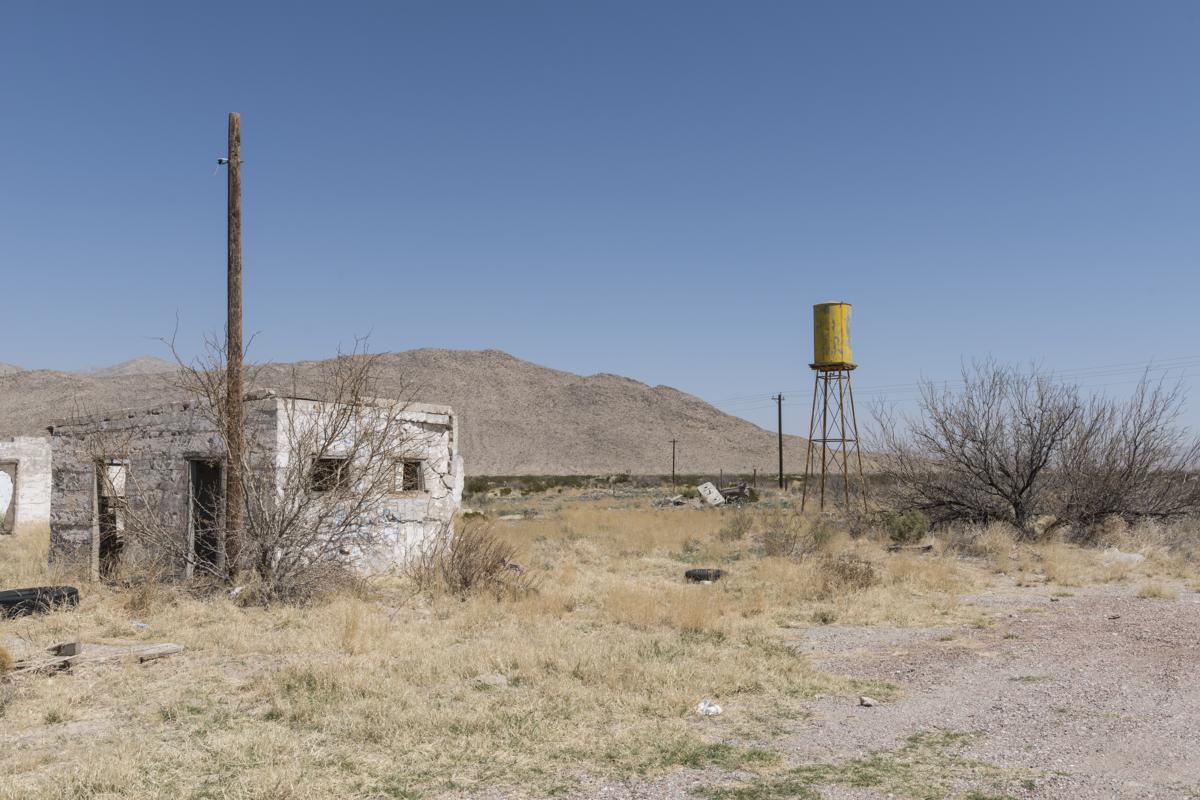
The stills that last are the ones already doing a painter's job: the wide establishing shot with nobody in it, the symmetrical corridor, the field in flat daylight. Those carry their own answer. A close-up at the top of a scene does not, and no panel can supply one.
There is a plain geometric catch as well. Most films are shot wider than the 16 by 9 of a television, so a still on your wall has either lost its ends or gained two bands of nothing. Neither is wrong. It is just worth expecting, because the frame you remember from the cinema was the wider one.
The cinema already in the vaults
Nobody invented cinematic composition in 1895. The devices a film uses to hold your eye were worked out by painters and printmakers, and the originals are public domain, free, and sitting in the masters right now.
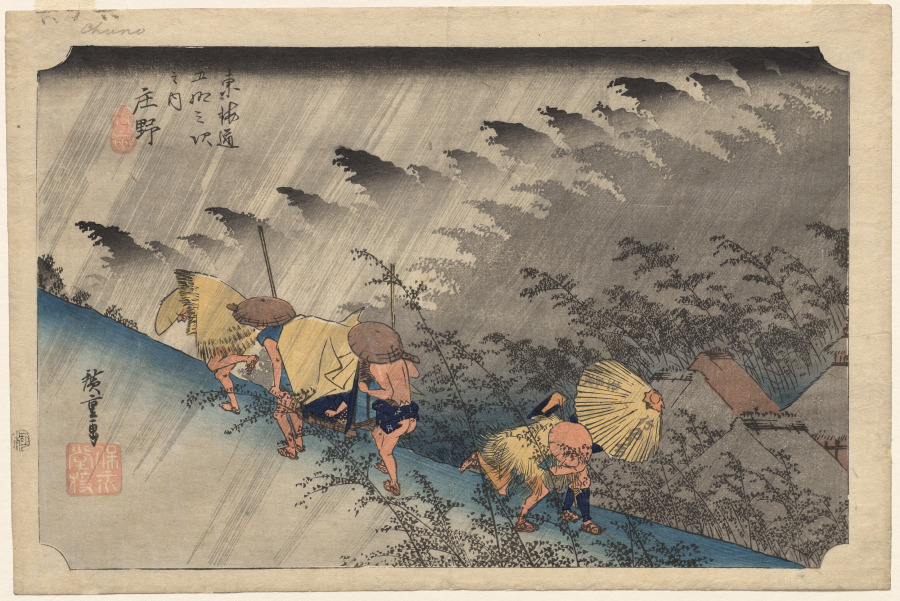
Look at what Hiroshige is doing there. A hard diagonal, figures caught mid-stride, rain drawn as straight lines across the whole picture, a village dissolving into grey at the back. It is a frame from a film in every respect but one: it resolves. You are not waiting for the next shot. The rain is the subject, and the rain has already won.
- Japanese woodblocks: foreground objects shoved right up against the lens, deep space running away behind them. Cinema borrowed the device whole and still uses it every week.
- Night pieces: nocturnes are the closest a painting gets to a lit set. Painted dark, for a dark room, which is the exact condition your Frame is in after eight o'clock.
- From the road: forty years of American back roads with a camera, and the establishing shot of roughly every film you can name. The ghost town at the top of this page is one of them.
- Quiet interiors: the held shot where nobody speaks. Sunlight across a floor, a door left open, a letter being read.
This week
Hang one picture and give it until Thursday. That is the whole test, and it is the only one we trust: not whether it stops you on the first evening, but whether you are still glad it is there on the fourth. Striking fails that test constantly. Quiet passes it almost every time.
If you want the cinema without the subscription, run From the road through the daylight hours and Night pieces after dark, both free in the vaults, both a tap from the wall in Wall Muse. Then keep whatever is still welcome on Thursday and let the rest go. The wall gets quieter every time you run it, and quieter is the direction a wall should travel.