 Wall Muse
What the light sensor does to a painting after dark
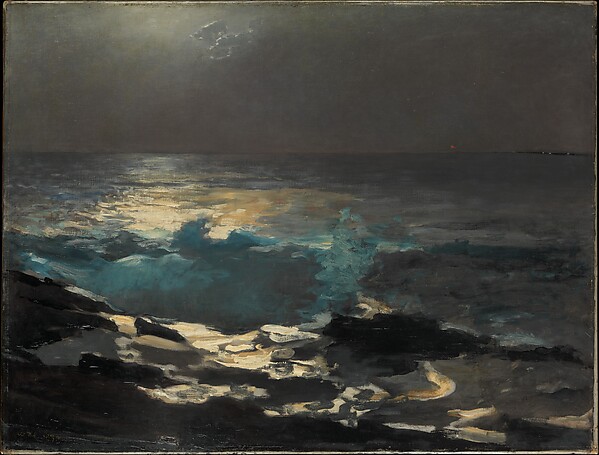
A picture that looked right at four in the afternoon can look grey and tired at nine at night. Nothing is broken. Your Frame has a brightness sensor, it is switched on out of the box, and it has quietly turned the painting down to match the room.
Why the sensor exists
A painting on a wall has no light of its own. It borrows the room's. Dusk falls, the picture falls with it, and by lamplight an oil painting is mostly warm shadow with a few things still catching the light. That is how paint has always behaved and it is what your eye expects from anything hanging on a wall.
A screen behaves the other way. Left alone it puts out the same light at midnight as at midday, and a panel doing that in a dark room stops reading as a picture and starts reading as a lightbox. So the Frame measures the room and follows it down. Samsung ships the brightness sensor on and the motion sensor off, as its own support notes on the sensors set out, and the brightness sensor is doing the harder job of the two.
Most of the time it is right, and the reason the illusion works at all. It goes wrong in one place: a picture that was already dark. A nocturne, a night sky, a room lit by one candle. Half of it sits near black to begin with, and taking another third off the panel takes the shadow detail with it. The moon stops being a light source and becomes a pale smudge.
The settings worth knowing
Press up on the remote while art is showing and you get Screen Settings, which holds Brightness, Colour Tone and Brightness Reset. Further down the art home page, Art Mode Options holds Sleep After, Motion Detector and Night Mode. Samsung's walkthrough has the exact menu path for your model.
- Brightness is an offset on top of the sensor, not a replacement for it. For a dark picture, two or three steps up is usually the whole fix. Sending it to the top defeats the sensor and you are back to the lightbox.
- Colour Tone is the one most people never touch and should. Warm suits oil paint under lamplight, because the varnish on a real painting goes amber in that light too. Cool suits photographs and anything with a lot of sky. A room after dark almost always wants warmer than the same room at noon.
- Night Mode turns the panel off once the room is genuinely dark and brings it back when the light and the movement return. Leave it on. Some of the time the honest answer to "the art looks bad at midnight" is that nobody should be looking at midnight.
- Brightness Reset is the undo. Worth remembering before you start, because it is easy to spend twenty minutes making things worse in small steps.
Hang pictures that survive the dimming
Settings are half of it. What you hang is the other half, and it is the half that actually decides.
A picture with one clear light source inside it holds up when the panel dims, because the eye reads the contrast between the light and the dark rather than the absolute level. Moonlight on water. A candle on a table. A doorway open onto a lit room. Take fifty per cent off the panel and the picture still has a light in it, so it still looks like a picture. A painting that is mid-tone all the way across has nothing to hold onto and turns to mud.
That is the whole idea behind Night pieces in the vaults: nocturnes, moonrises and lantern light, gathered because they are the pictures that get better as the room gets darker rather than worse. The Homer above is the shape of the thing. Cloud, a headland, and one light doing all the work.
The reverse is worth knowing too. High-key photographs, snow scenes, big pale skies: these want the sensor's full range and they look thin and papery after sunset. Hang those for the daytime and let something else take the evening.
This week
Wait until the room is properly dark, then hang one piece from Night pieces and leave it up for the evening. If it reads flat, go up two steps of brightness and one step warmer on colour tone, and nothing else. Then hang a bright landscape straight after it and look at the difference. Ten minutes will teach you more about your own room than any settings guide, and after that you will know which wall wants which picture at which hour.