 Wall Muse
Hang it at picture height, not at television height
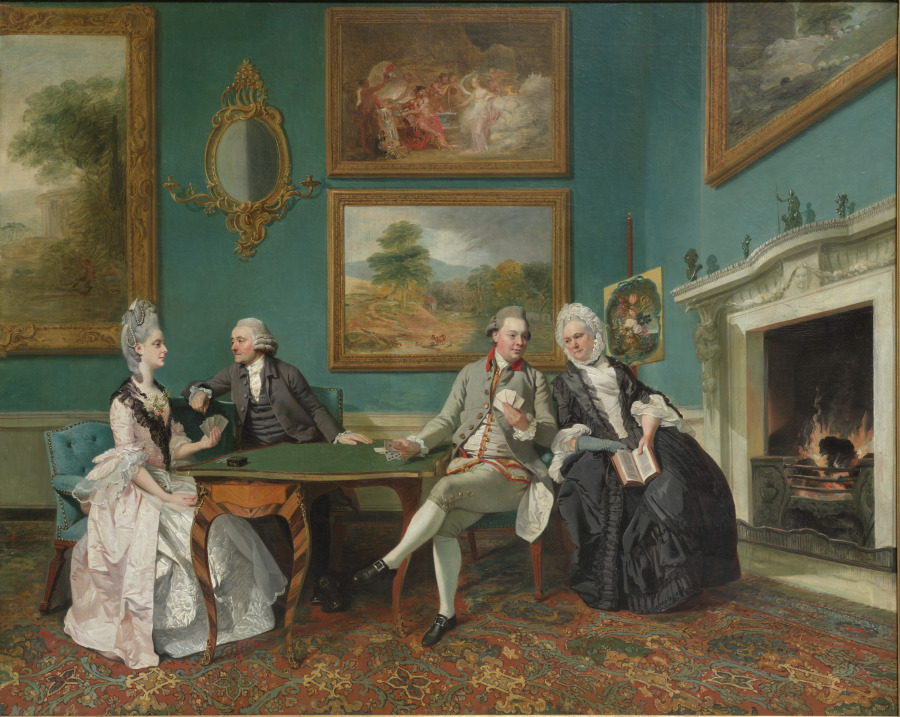
If you want your Frame to read as a picture rather than as a television, the setting that decides it is not in any menu. It is the height of the thing on the wall, and on most walls the bracket decided that, not you.
The television turned up at the furniture fair
High Point Market, the home furnishings trade fair in North Carolina, runs from Saturday to Wednesday this week. Samsung is there in a furniture showroom rather than an electronics hall, with a Frame Pro styled into the room and finished with a bezel from a third party frame maker, alongside a panel on the programme called "Beyond the Black Box: The New Role of Art, Design and TVs in the Home". Samsung's newsroom gives the reason in one line: "For decades, the TV was something designers had to hide, disguise or design around."
It is a sales push, complete with a trade discount for designers who turn up. The idea underneath it is still right, and it is one you can act on tonight without buying anything. A screen that is treated as furniture gets hung where a television goes. A screen that is treated as a picture gets hung where a picture goes. Those are two different heights, and the second one is lower than you think.
Two different numbers
The convention people in the art trade use is simple: measure to the centre of the work, not to the top and not to the hook.
Kelly Cahn, an art advisor and appraiser speaking to Livingetc, puts it at "approximately 60 inches [or 150cm] from the floor". In the same piece, Jason Wickens, who runs a print business, gives the older version of the rule as 57 inches, or 145cm, and says it "is widely used in galleries and by many interior designers". So the band is roughly 145 to 150cm to the middle of the picture, which is where an adult's eye lands standing up.
Now measure your Frame. A 55 inch screen is about 68cm tall, so centring it at 145cm puts its bottom edge around 111cm off the floor. A 65 inch is about 81cm tall, and its bottom edge lands near 105cm. If your screen sits higher than that, and most do, it was hung to clear a console or a mantel rather than to meet your eye.
Two honest adjustments. If the room is for sitting and you also watch television on it, come down a little rather than up: a seated eye line is lower again, and a picture hung slightly low still reads as a picture, while one hung high reads as a screen. And where the Frame sits above furniture, the same advice holds that holds for any picture: leave about 15 to 30cm between the top of the furniture and the bottom of the frame, so the two look related instead of stacked.
What the old rooms knew
The Zoffany above is a room that was designed around its pictures, and it breaks the rule cheerfully. The landscapes hang well above head height because the wall is tall and the pictures are large, the frames pick up the gilding on the mirror, and everything is sized against the chimneypiece rather than against a tape measure.
That is the part worth stealing. The number gets you close. The wall finishes the job. Stand in the doorway, which is where everyone first sees the room, and judge it from there rather than from the ladder.
The surround is part of the picture
Two more things separate a hung picture from a mounted screen, and neither is expensive.
- The bezel. The Frame takes a changeable surround, from Samsung and from other makers, and the finish matters more than the colour. A warm timber in a room of warm timber disappears, which is the goal, while a white bezel in a room with no other white in it announces itself.
- The cable. A picture has no cable. One visible lead undoes the whole illusion from across the room, so route the single cable behind the wall or into a channel before you worry about anything else.
Then there is the mat the Frame draws on screen, which is doing the same work as the band of card around a drawing, and which we went through in what a mat does to a picture.
This week
Find a tape measure and mark 145cm on the wall in pencil. Hold your hand there, then look at where the centre of your Frame actually is. If the gap is more than a hand's width you now know the single change that would do most for that wall, and it costs an afternoon with a drill rather than a subscription.
While you have the room's attention, hang something that belongs to it. Quiet interiors is full of rooms painted by people who thought hard about walls, and Golden hour warms a room the way a lamp does. Both are free to hang, at whatever height you settle on.